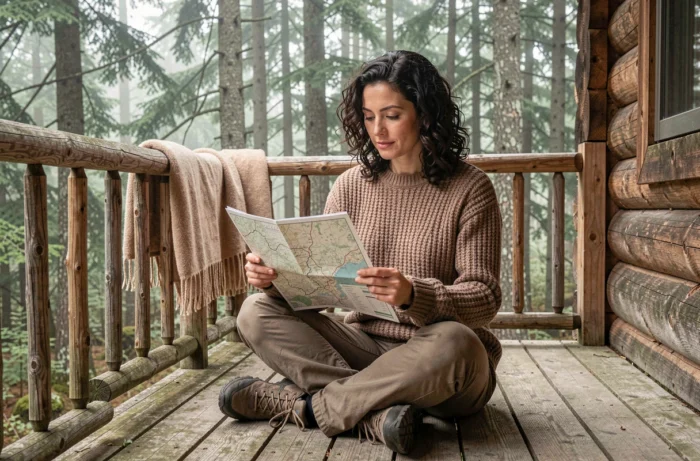
The nature accommodation market has expanded considerably in recent years. Treehouses, transparent bubbles, yurts, lodges, tiny houses: there’s no shortage of options. Choosing comfortable accommodation for an outdoor adventure means looking beyond appealing photos and checking practical details, from how easy the site is to reach to whether its environmental claims are credible.
Car-free access and reduced mobility: the blind spots of nature accommodation
Most accommodation guides focus on the type of lodging or the budget. One criterion rarely explored in depth is whether you can actually reach the site without a personal vehicle. Accommodation described as “surrounded by nature” may be several kilometres from the nearest train station or bus stop, with no shuttle service or usable cycle path.
Accommodation that’s accessible by train or bicycle, with ways to get around without a car once you arrive, may be a more sensible choice than an isolated property that nevertheless advertises “green” amenities. Before booking, check whether the provider offers a transfer from the station or whether marked cycle routes connect the site to nearby attractions.
For people with reduced mobility, the challenge is even greater. Treehouses and bubbles set on sloping ground pose obvious access problems. An accessibility or inclusive hospitality label can be a reliable guide, provided you confirm that the property is listed in the label’s official directory. Generic claims such as “accessible to everyone,” without details about door widths, ramps or adapted bathrooms, aren’t enough.
Among providers that document these details, Aventures Légendaires accommodation outlines access conditions and available facilities at each site, making it easier to plan a stay around your mobility needs.
Environmental labels for nature accommodation: separating genuine commitment from marketing claims
Terms such as “eco-friendly,” “nature-conscious” and “green accommodation” are appearing more and more often in descriptions of nature stays. ADEME recommends looking for specific, verifiable claims rather than generic marketing language. Vague wording says nothing about the manager’s actual practices.
To assess whether an environmental commitment is credible, make these three checks:
- Find the exact name of the label, the certifying body that awards it and the certificate’s expiry date. A logo with no verifiable reference is a red flag.
- Check the label’s official directory to confirm that the property is actually listed, rather than simply using its logo.
- Read about the specific actions covered by the certification: water management, waste disposal, local sourcing and limiting nighttime lighting. A credible label details these commitments.
This takes just a few minutes and helps you avoid greenwashing. Don’t rely on marketing language alone—it’s a basic rule for making an informed choice. Newer certifications tend to cover a wider range of issues (biodiversity, noise impact and landscape integration), making them more useful when comparing competing options.
What comfort really means in nature accommodation: what the photos don’t show
The comfort advertised and the comfort you experience can differ considerably. A transparent bubble offers spectacular views of the sky, but without adequate ventilation, the temperature inside can become unbearable in summer. A “fully equipped” cabin may have a decent bed but shared bathrooms fifty metres away, in the rain.
Checking for a private toilet, running water and heating suited to the season should be part of your routine before booking. This information isn’t always on the accommodation’s main page: you may find it in the terms and conditions or in responses to guest reviews.
Thermal insulation and seasonality
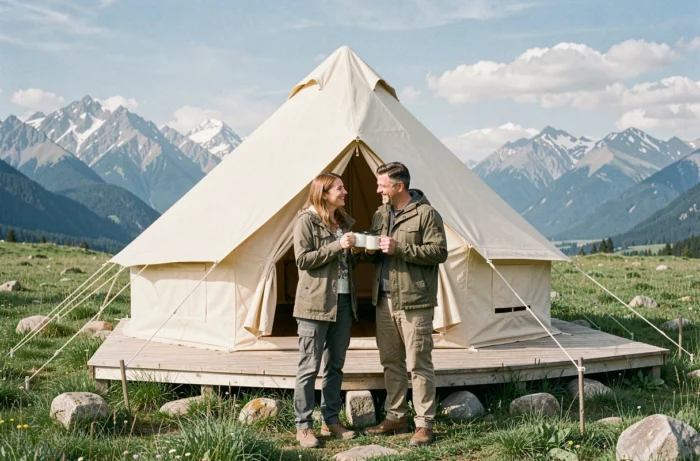
A canvas lodge or yurt may be perfectly comfortable in spring or autumn, but unpleasant in the depths of winter without extra insulation. Ask the provider about average nighttime temperatures during your stay and what facilities are available (wood-burning stove, extra blankets, insulated double walls).
The season also affects local wildlife. Mosquitoes, which are common in wetlands from June to September, can turn a night in an open bubble into an unpleasant experience. Built-in mosquito nets or an insect-control system can make the difference between an enjoyable stay and a sleepless night.
Noise and privacy
Accommodation described as “secluded in the heart of the forest” may be just a few dozen metres from another unit on the same property. The density of accommodation on a site directly affects privacy and noise levels. Guest reviews often mention this, even though it rarely appears in official descriptions.
Budget and value for comfort: weighing your options without overpaying for the “unusual” label
The unusual nature of a property may justify a higher price than a standard holiday rental. The question is what that extra cost actually covers. A high price doesn’t guarantee greater comfort: sometimes it reflects only the novelty of the concept or the appeal of the natural setting.
To compare options effectively, list the amenities included in the price (bedding, breakfast, spa access, towels and linens, welcome pack) and those charged as extras. Less expensive accommodation with all the essentials included may offer better value for comfort than a premium property where every service costs extra.
The length of your stay matters too. For one night, the “experience” is the main attraction, and a higher budget may be justified. For three nights or more, everyday comforts (a fully equipped kitchen, storage space and somewhere to charge your devices) become decisive. Matching the type of accommodation to the length of your stay helps avoid disappointment.
Ultimately, choosing nature accommodation comes down to checking the details: access, labels, practical comfort and the true cost. Properties that clearly document these aspects, supported by photos and guest reviews, deserve preference. The rest is just scenery.