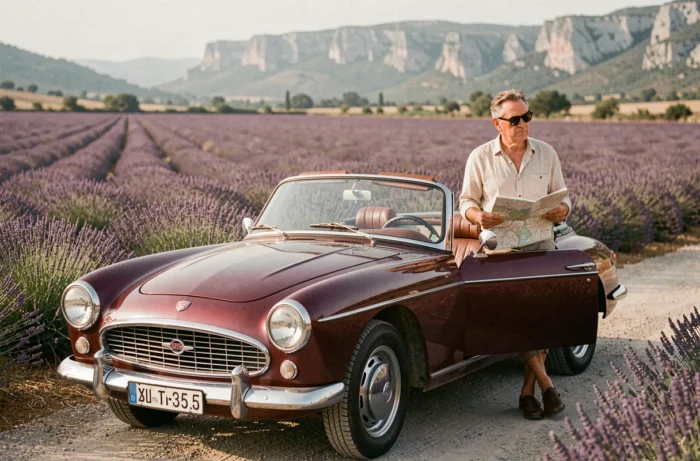
Driving a classic car along a tree-lined country road means embracing a pace that motorways have erased: stopping to let the engine cool, taking detours to avoid low-emission zones, and filling up at village petrol stations. Before choosing a route, you need to take into account the mechanical and regulatory constraints that apply to classic cars in France.
Low-emission zones and classic cars: what to check before each urban stop
You can plan a route along country roads, but even a quick stop in a city centre can cause problems. Low-emission zones now cover several French metropolitan areas, and exemptions for classic cars vary from one local authority to another. In Paris and Lyon, restrictions on Crit’Air 3 vehicles and above came into force on 1 January 2025.
The “classic car” status shown on the registration certificate does not provide a uniform nationwide exemption. You need to check the boundaries, operating hours and required procedures for every city on your route. A classic car registered with a standard certificate, without classic vehicle status, is not eligible for any exemption based on the vehicle’s age.
The FFVE can provide a preliminary assessment of eligibility for classic vehicle status, but this does not guarantee either the final certificate or the ANTS registration decision. We recommend preparing your application several months before setting off, especially if your road trip passes through urban areas subject to restrictions. Planning a route that avoids the affected city centres remains the most reliable way to enjoy a worry-free drive with Vintage Roads or any other classic car tour operator.
Classic car routes in Provence: roads where the engine can breathe
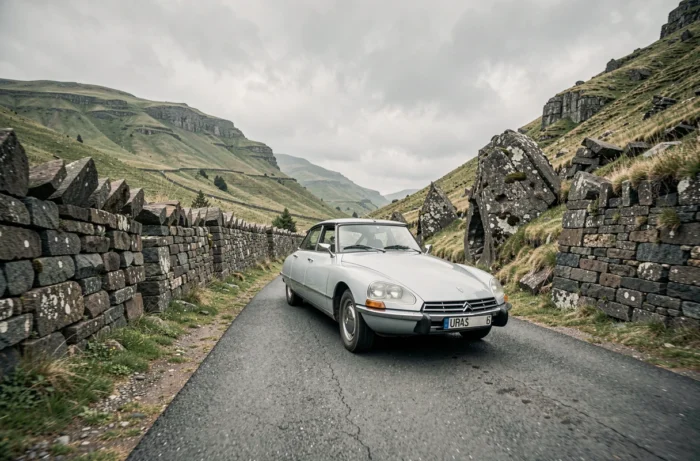
Provence is ideal terrain for classic cars with carburettors. The dry air reduces condensation problems in the fuel system, while the moderate gradients between the villages of the Luberon are easy on close-ratio gearboxes.
A route from Apt to Gordes along the D-roads lets you drive at a pace suited to 1960s and 1970s cars, without having to contend with summer traffic on the D943. You’ll pass through listed villages (Roussillon, Bonnieux, Lacoste), with natural stopping points every ten to fifteen kilometres—about as long as you’d want to drive before stopping to check the engine on a classic car.
The Mont Ventoux trap in a classic car
The climb up Mont Ventoux puts the cooling system under considerable strain. In a car with its original water-cooling system and an unreconditioned water pump, overheating often occurs on the final hairpin bends. Experienced drivers prefer to make the ascent early in the morning, while the outside temperature is still low.
On the way down, it’s the drum brakes that take the strain. Use second gear for engine braking and stop regularly to let the brake linings cool: adapt your driving to the car’s mechanics, not the other way around.
Loire Valley châteaux route in a classic car: a flat, forgiving drive
The Loire Valley is almost completely flat between Blois and Saumur, making it an excellent route for low-powered models. A 2CV, Renault 4 or Peugeot 204 can take it in its stride, at a pace that lets you enjoy the vineyard scenery and Renaissance façades.
- Blois to Amboise via the D952 (south bank): a quiet road with few heavy goods vehicles and possible stops at Chaumont-sur-Loire
- Amboise to Tours along the smaller roads through Vouvray: the vineyards offer shady spots, perfect for checking the oil level
- Tours to Saumur along the Loire embankment: a long, straight stretch beside the river, with a steady engine speed and little mechanical wear
This route is ideal for your first drives after a restoration, as it lets you run in an engine without exposing it to excessive heat. You can maintain a safe mechanical margin while travelling through some of France’s most photographed landscapes.
Preparing your classic car for a long-distance road trip
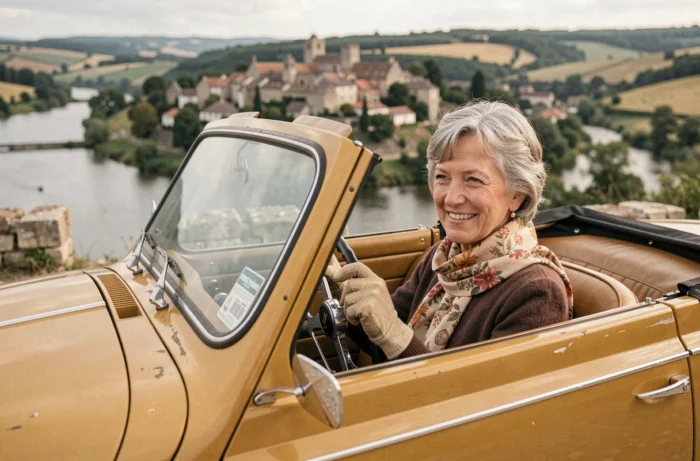
A multi-day road trip in a classic car takes careful planning. Reliability depends less on the model you choose than on the preparation you do beforehand.
- Check the condition of the hoses and clamps: a cracked hose can fail after two hours on the road in hot weather
- Carry spare spark plugs, a condenser and an ignition coil: these parts can fail without warning and can be replaced at the roadside
- Check wheel bearing play and the condition of the driveshafts: a worn bearing can cause the hub to overheat and lock the wheel
- Bring a can of engine oil and some coolant: oil consumption is normal in a classic car and should be expected
Your choice of model affects how easy it is to find parts along the way. Popular French cars (2CV, R4, 204, DS) are supported by a strong network of specialists across the country. With a British or Italian model, sourcing spare parts becomes more complicated as soon as you leave the major cities. This factor can shape your route just as much as the scenery.
Adapt the route to the car, not the other way around
You wouldn’t plan the same stages in a Traction Avant as you would in an Alpine A110. The former is suited to long straights and low engine speeds; the latter comes into its own on mountain passes. A successful classic car road trip is one where the route brings out the vehicle’s strengths.
Every classic car has its ideal terrain. Recognising it before planning your route helps you avoid breakdowns and frustration, and turns a simple drive into a true journey.