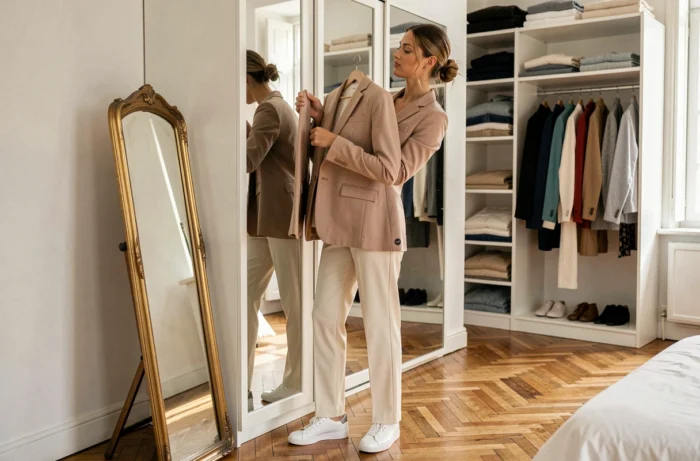
Putting together an everyday look means combining pieces that work well together in terms of proportions, fabrics and colors. The result depends less on how many clothes you own than on how you put them together. Three technical factors determine whether an outfit feels cohesive: balanced proportions, a well-planned color palette, and a clear hierarchy between the main piece and the supporting pieces.
Proportions and volume: the factor fashion guides overlook
Most style advice focuses on choosing individual pieces. The real key to looking polished comes first: balancing volume between the top and bottom half of the body. A well-defined silhouette relies on a simple contrast: one fitted piece paired with one looser piece.
Wide-leg trousers call for a close-fitting top. Slim jeans work better with an oversized shirt or a slightly unstructured blazer. When both halves of an outfit have the same volume (loose/loose or tight/tight), the silhouette loses its shape and the eye has nowhere to settle.
This principle works regardless of seasonal trends. Whether fashion is leaning toward cargo pants or midi dresses, alternating proportions remains the foundation of a cohesive look. For more guidance on putting pieces together, the editorial sections at afashionista.fr explore outfit combinations for different body shapes.
Layering follows the same rule. Each added layer should remain visible without overwhelming the one beneath it: a T-shirt under an open cardigan under a straight-cut coat creates three distinct visual layers. Stacking three layers of the same length has the opposite effect, creating a compact block that obscures the lines.
Colors and everyday outfits: building a versatile palette
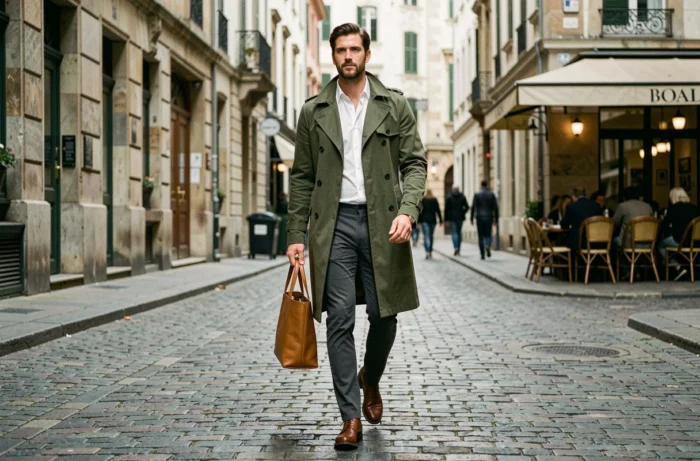
Choosing colors is not just a matter of instinct. A palette of five to seven complementary shades is enough to cover most everyday combinations. The idea is to start with two or three neutrals (navy, heather gray, beige, black, off-white), then add two distinctive shades that become the signature colors of your wardrobe.
The practical rule is simple: no more than three visible colors in a single outfit. Beyond that, the overall look becomes harder to read. Patterns count as an additional color. A blue-and-white striped shirt paired with khaki trousers and white sneakers already brings the total to three color elements.
Colors and fabrics work together
The same shade of beige can look dull in lightweight cotton and warm in ribbed knitwear. Texture changes how we perceive color. Pairing two pieces in the same shade but different fabrics (a wool sweater and cotton twill trousers, for example) adds visual depth that an all-over monochrome look in the same fabric cannot achieve.
Pastel shades, which regularly feature in seasonal trends, work best in small doses against a neutral base rather than in a head-to-toe look. A pastel accessory or top paired with a dark bottom is enough to embrace the trend without making the outfit look like a catalog.
Wardrobe essentials: choosing versatile pieces
A wardrobe essential is not a boring item of clothing. It is a piece whose cut and color make it easy to pair with as many other items in your wardrobe as possible. The deciding factor is neither price nor brand, but versatility: how many different outfits can you create with this piece?
- Straight-leg raw denim jeans work with a blazer for a meeting, a white T-shirt at the weekend, or a knit sweater for an evening out. Three occasions, one piece.
- A plain midi dress in a neutral color can go from the office (with loafers and a structured jacket) to dinner (with heeled sandals and a statement piece of jewelry) without any other changes.
- A blazer in a fabric soft enough to resist creasing in a bag works as a final layer over most tops, from a T-shirt to a turtleneck.
Before buying, try this simple test: if you can’t picture the piece working with at least three outfits already in your wardrobe, it may end up staying on its hanger.
Statement pieces and wardrobe staples
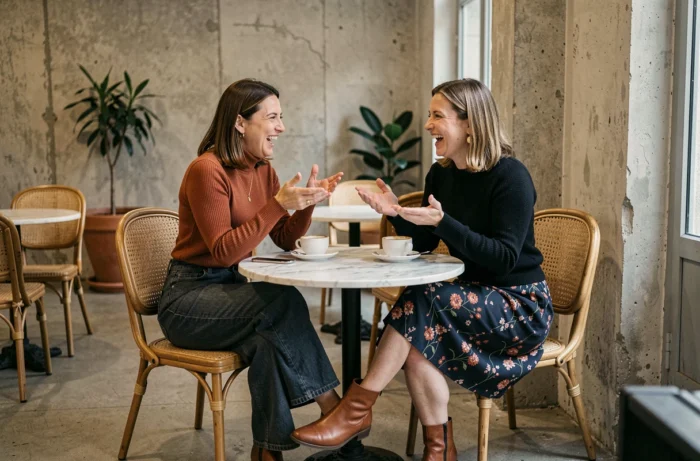
An effective wardrobe depends on the right balance. Most clothes should be neutral, versatile staples. A smaller number of statement pieces (a colorful coat, a printed skirt, a standout accessory) add personality. Too many statement pieces make an outfit hard to read because the eye no longer knows which one is the focal point.
In practice, one statement piece per outfit is enough. The rest should complement it without competing for attention. This makes getting dressed in the morning easier: choose the standout piece first, then build the rest of the outfit around it.
Accessories and everyday style: the most affordable way to switch things up
Changing your bag, belt, scarf or jewelry can transform an outfit without changing your clothes. Accessories act as a style dial: the same basics can look casual or dressed up depending on what you pair them with.
Wide-leg trousers and a white T-shirt worn with white sneakers and a tote bag create a casual look. Pair the same pieces with leather loafers, a watch and a structured bag, and the outfit feels more polished. Accessories define the feel of an outfit more than the clothes themselves.
Secondhand shopping is a great way to add variety to your accessories without buying everything new. In France, sales of secondhand clothing and accessories continue to grow, and the most sought-after items are still bags, belts and jewelry—precisely because signs of wear are less noticeable and their impact on an outfit is so significant.
One last useful habit before heading out: check your outfit in a full-length mirror and identify the focal point. If nothing catches the eye, add an accessory. If three elements are competing for attention, take one away.