Refreshing the atmosphere of a room without buying a single new piece of furniture may seem like a modest goal, but there are more ways to do it than you might think. From rearranging existing items to textile repairs supported by public schemes and reuse organized through the furniture sector, everyday home décor inspiration is taking on a new meaning. Le Terrier de Lily explores this very territory, at the crossroads of home ideas and practical steps.
Rearranging, repairing and reusing textiles: what industry figures reveal
Sustainable decorating is no longer limited to choosing raw materials or simply browsing flea markets. In France, the furniture sector reused or repurposed furniture items in 2024, according to a figure reported by Design Jobs and attributed to ADEME. This volume reflects the genuine development of second-hand channels, well beyond sales between individuals.
The repair bonus, often associated with household appliances, also covers textiles, shoes and household linens when handled by QualiRépar-certified repairers. In practical terms, curtains, covers or tablecloths can be repaired rather than replaced to transform a room’s atmosphere.
| Decorating option | Estimated cost | Visual impact | Time required |
|---|---|---|---|
| Move furniture between rooms | None | High (new proportions) | A few hours |
| Repair textiles (curtains, covers) | Low (repair bonus may be available) | Medium to high | A few days |
| Reuse items through organized channels | Variable (second-hand) | High (one-of-a-kind piece) | Depends on availability |
| Change textiles only (cushions, throws) | Moderate | High (color, texture) | Immediate |
This table highlights a simple fact: rearranging existing items offers the best effort-to-result ratio. Moving a bookcase, swapping a chest of drawers between the bedroom and the entryway, or relocating a light fixture changes how spacious a room feels without creating any waste. Resources such as https://leterrierdelily.com share ideas like these in posts celebrating the simple pleasures of everyday home life.

Sustainable decorating and regulations: what’s changing for furniture and textiles
The French Environmental Code now requires furniture retailers to take back used furniture. This legal framework offers a practical angle often missing from home décor blogs: when you bring home a new piece of furniture (even second-hand), the retailer can take back the old one. This closes the loop between replacing and reusing furniture without filling up your garage.
At the European level, the ESPR regulation is set to consider furniture among the relevant product categories from 2028. Requirements will focus on durability, repairability and disassembly. The 2025–2030 work plan points to a future in which furniture is designed to last through several successive room layouts.
This regulatory shift aligns with a common-sense approach to interior decorating: an item that can be taken apart and adapted to different uses is better suited to a change of room or a house move than a rigid, one-piece design with fixed dimensions.
Disassemblable furniture and modularity: a decorating criterion
Choosing furniture for its modularity is becoming as much a decorating habit as an eco-friendly choice. A shelving unit with interchangeable modules can serve as a bookcase in the living room, then as storage in a child’s bedroom. An item remains useful as a household’s tastes and needs change, provided it is designed to adapt.
Home inspiration blogs that include this criterion in their recommendations help readers distinguish a lasting purchase from an impulse buy. Style alone is not enough: adaptability over time deserves as much consideration as color or material.
Refresh a room’s atmosphere with textiles without replacing everything
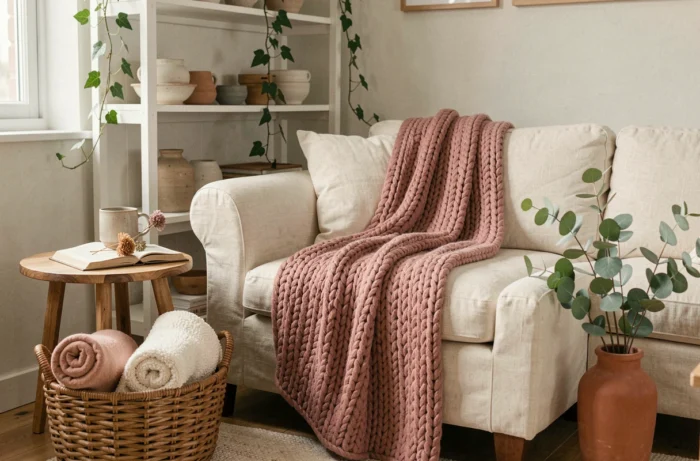
Textiles are the quickest and least expensive way to change the feel of a room. Replacing cushion covers, adding a throw to an existing sofa or changing the curtains can transform a living room’s color palette in just a few minutes.
The approach becomes even more effective when you combine new textiles with repairs. The repair bonus for textiles and household linens, available through QualiRépar-certified repairers, can extend the life of items that might otherwise have been thrown away. Here are the textile updates with the greatest visual impact:
- Swap curtains between two rooms: move a sheer curtain from the living room to the bedroom and a heavier curtain the other way, dramatically changing the light in both spaces
- Have existing sofa covers altered or dyed instead of buying new ones, changing the living room’s dominant color at a lower cost
- Layer different textures (linen, wool, textured cotton) on the same piece of furniture to create depth without buying any furniture
A targeted textile update costs a fraction of the price of a new piece of furniture and can have a comparable effect on how a space feels. This makes well-made, repairable and versatile textiles a smart choice.
Rearranging items: the free way to change a room’s proportions
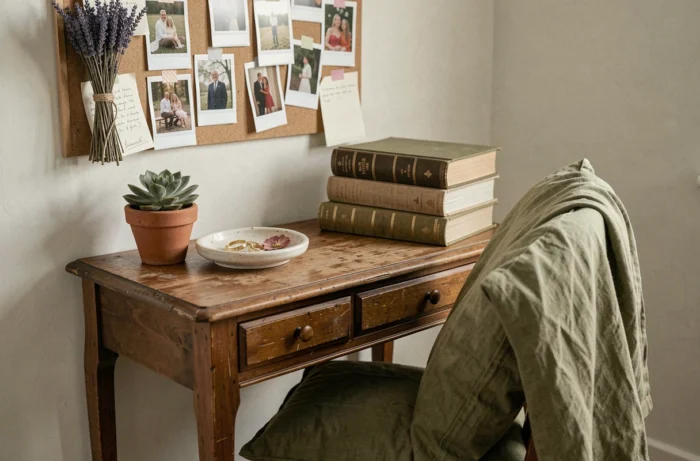
A living room can feel more spacious when the bookcase is moved from the wall opposite the door to a side wall. Moving a chest of drawers from the bedroom to the entryway creates a welcoming focal point where there wasn’t one before. These changes cost nothing and create no waste.
Changing how a piece of furniture is used can refresh the way an interior feels more effectively than buying another decorative item. A garden bench, cleaned up and placed in a sunroom; a kitchen trolley repurposed as a bedside table: these creative reuses are among the home ideas most widely shared on inspiration blogs such as Le Terrier de Lily.
The constraint of buying nothing becomes a creative catalyst. It encourages you to look at a room’s proportions, rethink how you move through it and try out unusual layouts. The result is often more personal than a purchase driven by a seasonal trend.
Combining furniture rearrangement, textile repairs and reuse through the furniture sector makes it possible to keep refreshing the atmosphere at home. Buying new becomes a last resort, not the first instinct, and every room can take on a new look with the changing seasons—without filling a skip.