A dog tied up on a short leash on a balcony, an empty food bowl for several days, regular cries coming from a neighboring apartment. In situations like these, the first instinct is often to find out who to contact so the animal can be rescued. However, reporting animal abuse follows a specific process, and its success largely depends on the quality of the information provided from the outset.
Animal abuse already reported: what to do if nothing changes
You contacted the SPA or called the authorities, but several weeks later the animal is still in the same situation. This is common and does not mean the report has been ignored.
A report to the SPA generally triggers an investigation by volunteer investigators. They assess the situation on site before deciding whether to intervene. How long this takes depends on the local branch’s workload, the number of ongoing cases and, sometimes, how difficult it is to access the location.
Making an initial report does not guarantee the animal will be rescued immediately. If the situation continues, you can follow up with new evidence: a dated photo showing the animal’s condition has worsened, a statement from another neighbor, or a visible change in the conditions in which the animal is being kept.
Following up does not mean taking the place of the investigators. Entering private property or trying to take the animal yourself could expose you to legal action. Your role is to be a witness, not an intervener. Gathering documented evidence (photos, timestamped videos, written notes) strengthens the case without crossing any legal boundaries.
Reporting channels: the SPA, police, gendarmerie and 3677 helpline
Before picking up the phone, identify the right contact based on how urgent the situation is. Not all channels serve the same purpose.
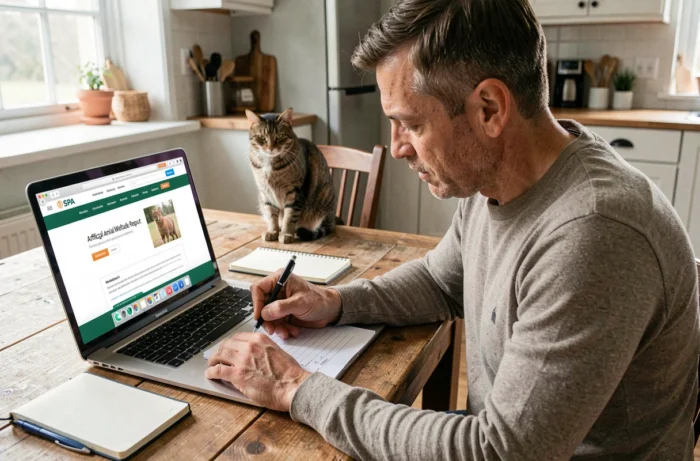
3677 is a referral helpline, not an emergency response service. It directs reports to the appropriate contact: a local animal welfare organization, the departmental veterinary services or law enforcement. To report animal abuse to the SPA, the online form on the organization’s website is the other main channel. Volunteer investigators then use these reports to identify animals in distress.
If the animal is in immediate danger (being beaten in public or locked in a vehicle in extreme heat), contact the police or gendarmerie directly. They are the only authorities with the power to intervene immediately in a public place or at a residence.
- 3677 directs your report to the right contact but does not trigger an on-site intervention.
- The SPA’s online form lets you send written and visual evidence to its investigators.
- The police and gendarmerie intervene in clear emergencies or when an offense is witnessed in progress.
- Departmental veterinary services (DDPP) handle reports concerning animal breeding or keeping conditions.
Each channel has a specific remit. Contacting several organizations at once will not necessarily speed up the process, but keeping a record of your efforts (call date, contact’s name, case number if provided) will make it easier to follow up effectively.
Building a strong report: evidence and precautions
A vague report such as “the neighbor’s dog looks unwell” is unlikely to trigger a high-priority investigation. The difference comes down to how precise the information you provide is.
Photograph or film the animal from a distance, from a place you are allowed to access (the street or a shared area). Each photo should be dated and geolocated to serve as evidence. The metadata embedded in phone files is generally sufficient.
Describe what you have observed objectively. Instead of saying “the dog is being abused,” write: “animal tied up outdoors with no shelter; empty food bowl observed on the 3rd, 5th and 7th of the month; ribs visible.” This level of detail helps investigators assess the severity without having to visit the site first.
- Provide the exact address, floor and access code, if relevant.
- Specify the species, apparent breed and number of animals involved.
- Say how long you have been observing the situation and whether it is getting worse.
- Attach several photos taken on different dates to show how the situation has changed.
Avoid confronting the animal’s owner before contacting the authorities. A neighbor dispute could complicate the investigation and put you in a difficult position. You can report anonymously through most channels.
What penalties could the person reported face?
Acts of animal abuse are punishable under criminal law. Penalties vary depending on the severity of the offense, ranging from fines to imprisonment for serious abuse. A court may also order the animal to be confiscated.
Reporting abuse does not automatically lead to prosecution. It triggers an investigation, which may result in a formal warning, mandatory veterinary care or, in the most serious cases, the animal being seized and criminal proceedings being brought.
Following up on a report without breaking the law
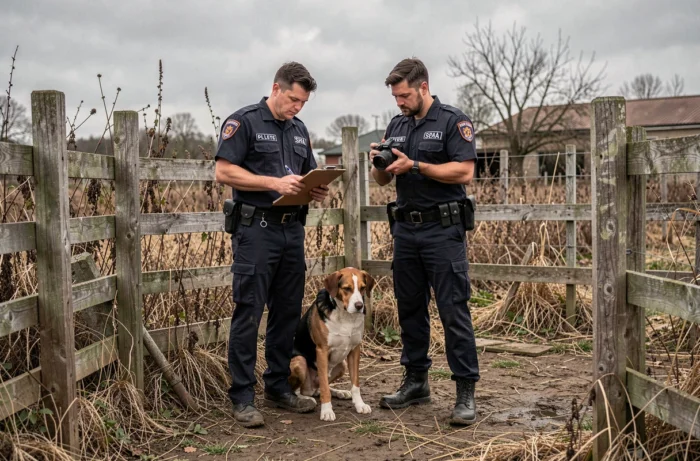
If several weeks have passed and nothing appears to have changed, it is reasonable to follow up. Contact the same channel you used initially and ask for an update on your case, referring to the date of your first report.
Provide new factual evidence each time you follow up. A recent photo showing that the situation has worsened carries more weight than a simple reminder call. If your local SPA branch does not respond, check its dedicated hours for animal abuse reports, which often differ from its general phone hours.
You can also contact another channel as a supplement. Sending the same case file to the departmental veterinary services or filing an incident report with the police creates an additional administrative record. Each documented record adds weight to the case and increases the likelihood of an intervention.
The temptation to act yourself grows when nothing seems to be happening. Staying within the law protects both you and the animal. A well-prepared case, regularly supported by dated evidence, will eventually lead somewhere, even if the wait feels long.