
Ordering tiles, parquet flooring or render without visiting a store has become commonplace. Buying materials remotely is appealing because it gives you access to a wide range, often at competitive prices, without being restricted by opening hours. But between browsing an online shop and having the goods delivered to a job site, there are several steps worth considering, especially when the products are heavy or fragile.
Delivering materials to an inaccessible job site: where things really go wrong
Have you ever seen a flatbed truck block a dead-end street for an hour? When you order materials online, access to the delivery location is rarely taken into account in advance. The carrier delivers to the curb, not to the third floor of a building with no elevator or to the end of an unpaved track.
Before confirming an order, check the seller’s delivery terms. Some offer pallet delivery to the foot of the building, while others charge extra for delivery to a hard-to-reach area. The delivery address determines the actual cost of the order.
Incorrect quantities are just as common an issue. Extra paving slabs can be stored, but being short by two square metres means placing another order, with the risk of a colour difference between batches.
For materials that need to be assembled (decking boards, skirting boards, wall coverings), allowing for cutting waste reduces the risk of running short during installation. Most building professionals recommend adding a margin, which varies depending on the type of cut and the material’s format.
For more on these logistical considerations, Vivez Décorez on buying materials remotely explains what to check before confirming your basket.
Right of withdrawal and returning materials: the hidden costs
When you buy remotely, you have the right to withdraw from the purchase. You can change your mind. What many buyers don’t realise is that the seller can legally make the consumer pay the direct cost of returning the goods, provided they were informed of this before making the purchase.
Returning a two-kilogram tin of paint is manageable. But for a pallet of tiles or a batch of decorative beams, return shipping costs can exceed the value of the product.
This is clearly set out in consumer law: the seller refunds standard delivery costs, but not the extra cost of an express delivery option chosen by the customer. The seller can also wait until the goods have been returned or proof of dispatch has been provided before issuing a refund.
What to check before ordering
- Read the terms and conditions on the returns policy, especially any mention of return shipping costs for bulky items
- Keep the original packaging intact until you have definitively approved the product, as goods damaged on return may be refused
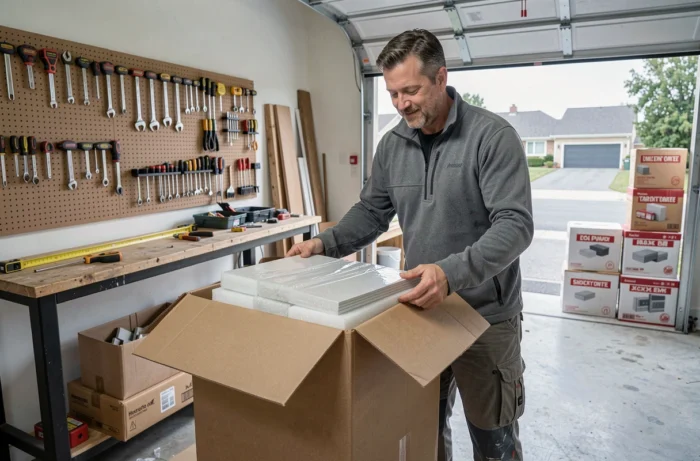
- Check the goods as soon as they arrive and report any issues within the timeframe specified by the seller
This legal framework is not intended to discourage online shopping. It simply serves as a reminder that placing an order easily does not mean returning it will be easy, especially when the products are heavy.
Product ranges and online catalogues: how to compare products without handling them
A physical store lets you touch a sample and see a colour in daylight. Online, photos have to stand in for the sensory experience. This is a real limitation, but most retailers make up for it by offering free samples or charging just a few euros for them.
Requesting a sample before ordering a full batch of wall covering, laminate flooring or tiles helps avoid unpleasant surprises. The colour displayed on screen depends on the monitor’s calibration. A physical sample is the only reliable way to check a colour.

What an online catalogue does better than a store
The breadth of the range is its clearest advantage. A physical store displays a few dozen products in each category. A website specialising in interior design or home improvement materials often offers several hundred, with filters for price, brand, use or format.
Comparing prices across several online shops takes just a few minutes. In-store, you have to travel. That’s a tangible time-saver, especially for standardised products (adhesives, grout, underlay, fixings), where the price difference between two retailers can be significant.
Sustainable materials and regulated products: buying online without overlooking standards
Some products sold remotely are subject to environmental requirements. This applies to paints, solvents and similar chemicals, for which a take-back scheme for used products is available. When buying these items online, check that the seller explains how collection or take-back works.
For building materials (insulation, panels, renders), technical data sheets should be available on the website. A reputable seller publishes certifications, fire ratings and mechanical properties. The absence of a technical data sheet on a product page is a warning sign.
- Look for applicable standards (fire rating, moisture resistance, environmental certification) directly on the product page
- Check that the seller clearly states the country of manufacture and the product’s composition
- Choose products whose regulatory markings are shown on the packaging in photos in the online catalogue
Buying materials for the home remotely does not remove the need to meet technical requirements. It can make them less visible, which means buyers need to do a little extra checking. Taking ten minutes to read a full product description before clicking “add to basket” is still the most worthwhile step in the entire online shopping process.