The garden tool market offers hundreds of products, from forged spades to connected lawn mowers. With so much choice, the decision depends less on a universal list of tools than on three practical factors: soil type, the area to cover and local regulations. The latter, rarely mentioned in buying guides, can nevertheless influence which equipment to choose.
Local regulations and noise: a factor to consider before choosing a tool
Before comparing the technical specifications of a petrol lawn mower or an electric hedge trimmer, one check is essential. Permitted hours for noisy gardening vary from one municipality to another. There is no uniform national framework: local or prefectural orders set the permitted time slots.
Using motorized equipment outside these hours may be considered a nuisance, even if it is working properly. The noise level stated by the manufacturer (in decibels) therefore becomes a selection criterion in its own right, just like power or battery life.
For gardens in densely populated urban areas, corded or battery-powered models run more quietly than their petrol-powered counterparts. This is not a marketing claim: it is a practical constraint that affects how often the tool can actually be used. When comparing the ranges available in Jardin Jade’s garden equipment, noise levels are listed among the specifications, making it easier to narrow down the options.
Soil and garden size: two factors that change your equipment needs
Heavy clay soil requires different tools from sandy soil. This may seem obvious, but it is often overlooked in generic lists of so-called “essential” tools.
Clay or compacted soil
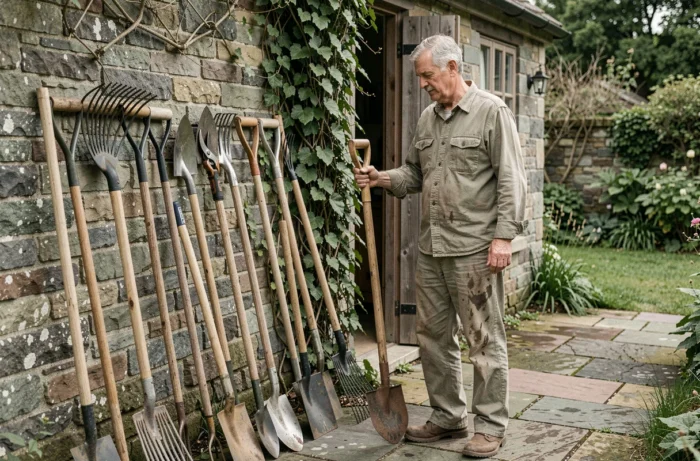
A broadfork (or digging fork) aerates the soil without turning it over, preserving microbial life. For very compacted soil, a forged steel digging fork is more effective than a flat spade, which tends to slip and strain your wrist. The tool’s weight and the shape of its tines matter just as much as the material.
Light or sandy soil
A fine-toothed rake is enough to level the ground and prepare seedbeds. A standard spade is useful here, as the soil offers little resistance. You may want to spend more on watering equipment than on soil preparation tools.
Garden size and choosing the right amount of equipment
For a space of just a few dozen square metres, a pair of pruning shears, a hand trowel and a watering can will cover most needs. Buying multiple power tools for a small garden means storing equipment that rarely gets used. Conversely, maintaining a plot of several hundred square metres using only hand tools can be physically demanding.
- Small garden or balcony: hand trowel, pruning shears, watering can or short hose, hand cultivator. Choose compact, lightweight tools that can be stored in a bag or on a patio.
- Medium-sized garden with a lawn and flower beds: lawn mower (electric if neighbours are close by), spade or broadfork, rake, garden hose with an adjustable spray nozzle, wheelbarrow.
- Large plot with hedges, trees or an extensive vegetable garden: hedge trimmer, loppers, garden shredder, programmable irrigation system, garden trailer.
Brush-clearing requirements: equipment that may be required by law
In areas at risk of wildfires, the French Forestry Code requires certain property owners to clear vegetation. The exact area to be cleared depends on the property’s location. Service-Public recommends checking your situation with the relevant authorities and notes that autumn and winter are suitable times for clearing vegetation.
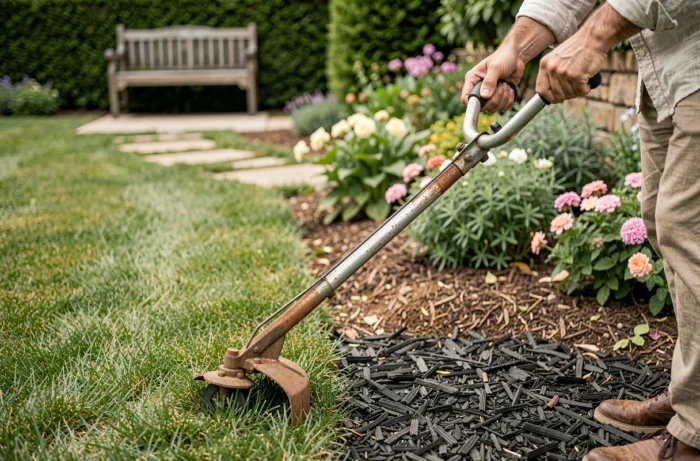
This requirement may justify buying a brush cutter, a heavy-duty grass trimmer or even a shredder to process garden waste. These tools are not always included in lists of “gardener’s essentials”, even though they are needed to meet legal requirements in many municipalities in southern France or near forested areas.
Ignoring this requirement can result in penalties. Choosing garden equipment is therefore not just a matter of convenience; it may also be necessary to comply with the law.
Garden watering: check for water restrictions before investing
Underground automatic irrigation systems require a significant investment. Their value depends directly on local water restrictions. During droughts, prefectural orders may restrict or prohibit garden watering, depending on the current alert level. The official VigiEau website lets you check the situation in your area in real time.
Installing a drip irrigation system targeted at the vegetable garden and flower beds uses considerably less water than an oscillating sprinkler covering the entire lawn. When restrictions reach the “enhanced alert” level, drip irrigation is often still permitted even when sprinkler watering is no longer allowed.
It therefore makes sense to factor in these regulations when choosing watering equipment. A timer paired with a rain gauge prevents unnecessary watering after rainfall and reduces overall water consumption.
Maintaining garden tools and extending their lifespan
A well-maintained tool can last for decades. A neglected one may need replacing every two or three years. Cleaning and drying each tool after use is the most effective way to extend its lifespan.
Pruning shears and hedge shears can be sharpened with a simple whetstone. Wooden handles should be treated with linseed oil once a season to prevent them from splitting. For power tools, replacing the filters and changing the oil (on petrol models) directly affects engine performance and lifespan.
France is making progress on repairability. The Ministry for Ecological Transition encourages people to repair rather than replace, which also makes sense when buying tools: a quality tool that can be repaired is better than a cheap, disposable model. Checking that spare parts are available before you buy can prevent your equipment from becoming unusable after a few years.
The right garden equipment is not the set that ticks the most boxes on a standard list. It is the equipment suited to your soil, garden size, neighbours and local regulations. Starting with these practical constraints helps you avoid unnecessary purchases and focus your budget on the tools you will actually use, season after season.