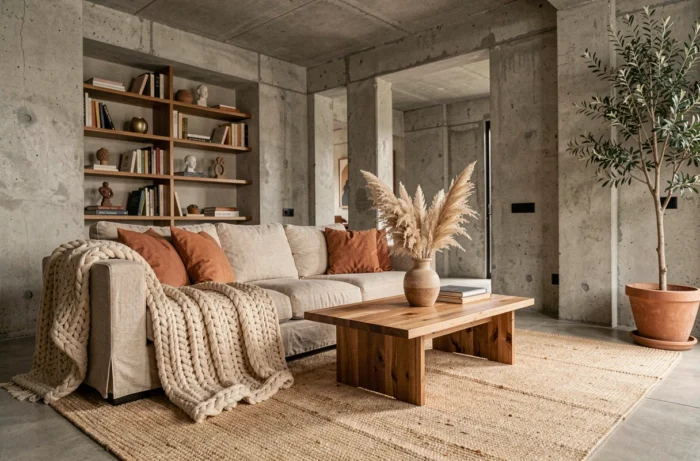
A raw linen sofa set on an old parquet floor, a brass lamp casting a soft glow across a stone wall: the warmth of a home doesn’t come from a catalogue, but from a combination of materials, shapes and light sources that work together. Creating a warm, elegant home comes down to practical decorating choices, not a pile of objects.
Tactile materials and textures: the first step towards a warm interior
The impact of touch on how we perceive a space is often underestimated. Before we even take in a living room, we feel the texture of an armrest beneath our hand, the coolness of a tiled floor underfoot or the softness of a wool rug. Materials shape the atmosphere just as much as colours do.
Solid wood, for example, brings a visual and tactile warmth that laminate cannot match. Even when scratched from use, a raw oak tabletop retains a character that laminate loses within the first year. When it comes to textiles, washed linen on a sofa ages better than taut synthetic fabric.
Natural materials also play an acoustic role. A thick cotton curtain, a mohair throw draped over an armchair, a velvet cushion: these elements absorb sound and reduce reverberation. In a room with tiled floors or polished concrete, this can dramatically improve comfort without adding a single piece of furniture.
Today, you can find furniture and decorative pieces designed to last, made with carefully sourced materials and expert craftsmanship, at specialist shops such as https://maisondezoe.fr/, which brings together collections focused on balancing elegance with authentic materials.
Colour palettes for an elegant interior that still feels warm
A common pitfall when aiming for elegance is to go all white or stick to a uniform grey. The result looks clean, but often feels cold. A warm palette relies on muted tones rather than saturated shades.
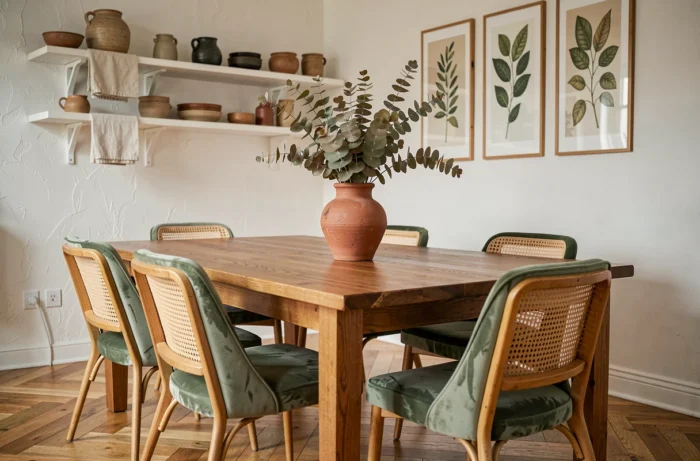
In practice, that means off-white rather than pure white, terracotta rather than bright red, and sage green rather than apple green. These shades work because they contain warm pigments (ochre, brown or pink) that soften natural light instead of reflecting it harshly.
How to combine colours with confidence
The most reliable rule is to limit each room to three dominant tones. Choose a base colour for the walls (the lightest), an intermediate shade for the main furniture, and a deeper tone for accessories (cushions, vases and frames).
- Off-white walls paired with a beige linen sofa and terracotta cushions create a natural progression without feeling monotonous.
- A living room with light grey walls feels warmer with a cognac leather armchair and a woven jute rug.
- A bedroom in blue-grey tones feels inviting as soon as you add light wood to the headboard and sand-coloured cotton sheets.
Avoid stark contrasts between walls and floors. Honey-coloured parquet beneath an anthracite wall can work in a spacious loft, but overwhelm a standard-sized living room.
Layered lighting: the technique that transforms a room
A single ceiling light in the centre of the living room is one of the most common mistakes. It illuminates everything evenly, with no depth, and creates the atmosphere of a waiting room. Layering several light sources at different heights transforms a room’s atmosphere without changing the furniture.
There are three types of lighting to combine in every room:
- Ambient lighting (a pendant or dimmable ceiling light) provides a soft background glow and should never be turned up to full brightness.
- Task lighting (a desk lamp, reading light or adjustable spotlights above a worktop) focuses on a specific area for a particular activity.
- Accent lighting (a table lamp on a low cabinet, a candle or a wall light aimed at a painting) adds depth and draws the eye to a particular feature.
In a living room, for example, you could combine a rattan pendant (ambient lighting), a black metal reading lamp beside the sofa (task lighting) and two candles on the coffee table (accent lighting). In the evening, switch off the ceiling light and keep only the lower-level sources on: with one simple gesture, the room goes from a functional space to a place to unwind.
Second-hand furniture and one-of-a-kind pieces: a practical design choice
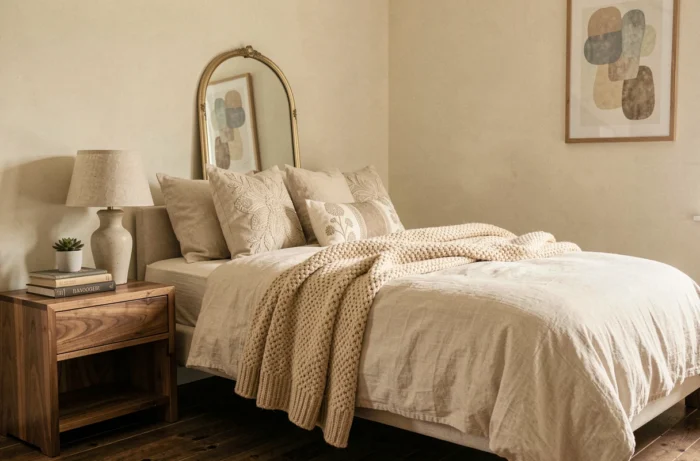
Second-hand furniture is still often associated solely with environmental concerns. In practice, it’s also a powerful decorating tool. A vintage 1960s chest of drawers, an antique mirror with a weathered giltwood frame, a brushed metal workshop chair: these pieces bring a personality that no mass-produced new furniture can offer.
An object with a visible history gives an interior depth. Marks on the wood, the patina of leather and the imperfections of handmade glaze all tell a story. The aim isn’t to match everything, but to create a dialogue between different eras and styles.
Furniture that can be repaired and reconfigured
For a home that may need to adapt over time (a move, a new baby or a change of room), choosing furniture that can be dismantled or repaired makes a real difference. A modular solid wood shelving unit can be reconfigured from a living room to a bedroom. An armchair with a seat that can be reupholstered by a professional upholsterer can last for decades.
Repairability is an increasingly important factor when buying designer furniture. A piece that can be adapted may cost more upfront, but its cost over its useful life is still lower than that of disposable furniture replaced every five years.
Ultimately, creating a warm, elegant home comes down to a few thoughtful decisions: materials you want to touch, a limited but well-balanced colour palette, layered lighting and a few characterful pieces of furniture. Three deliberate choices are better than a jumble of decorative objects with nothing in common.