
In Issy-les-Moulineaux, residents who want to compost their organic waste can collect a worm composter from Grand Paris Seine Ouest and track, month by month, how much waste is kept out of the bin. Published as open data, this monthly tracking illustrates an approach GPSO applies to several of its initiatives: measuring the tangible impact of each one, rather than simply announcing it.
Home composting across the GPSO area: monthly tracking that makes a difference
Most intermunicipal authorities distribute composters. GPSO goes a step further by publishing a dedicated dataset on vermicomposting, with monthly figures on the volumes processed by participating households. This provides an up-to-date, real-world indicator that helps identify slow periods and tailor awareness campaigns.
In practical terms, this dashboard, available on the agglo-gpso.fr open data platform, gives elected officials and local associations a way to take action. When the volume collected falls, they can step up communications in the municipalities concerned (Meudon, Chaville, Vanves, Sèvres, Ville-d’Avray, Marnes-la-Coquette, Boulogne-Billancourt). When it rises, they can identify the most active neighborhoods and organize workshops to share experiences.
This transparency has a useful side effect: it requires the area to treat composting as a measurable service, not a symbolic gesture. Moving from distribution to monitoring changes the relationship between the intermunicipal authority and its residents.
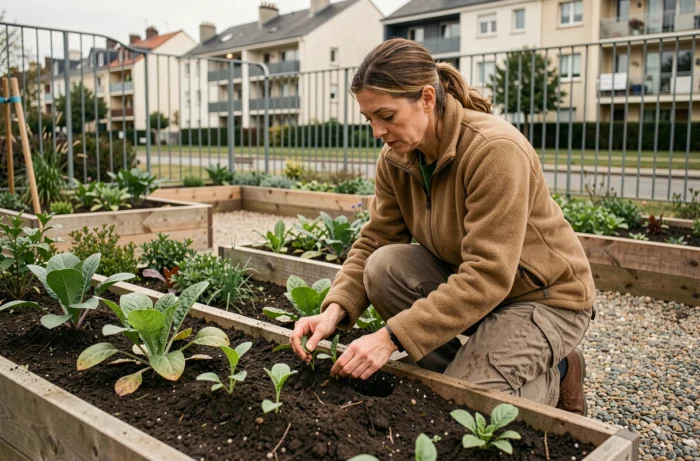
Employment inclusion at GPSO: hours worked as a social indicator
The area’s economic development is not limited to businesses located in its business parks. GPSO publishes data on the hours worked through employment inclusion schemes under its public contracts and development projects. These are hours worked by people facing barriers to employment, with support from employment inclusion organizations.
Making these figures available as open data sets GPSO apart from many intermunicipal authorities in the Île-de-France region, which mention inclusion clauses in their tenders but do not publish the results. Employment inclusion hours become an indicator of the area’s social performance, on a par with the business creation rate.
What this data makes it possible to assess
- The actual number of hours worked by employment inclusion program participants over a given period, rather than a simple forecast included in a public contract
- How those hours are distributed across different types of projects (roads, green spaces, buildings), providing insight into the most active local employment inclusion sectors
- Changes over time, making it possible to see whether social clauses have a lasting impact or remain occasional
For businesses in the area, this visibility can also support recruitment. Employment inclusion organizations train people for operational roles, and public reporting makes it easier to connect employers with candidates.
Digital services and address management: an unobtrusive but essential infrastructure
Postal addresses are rarely thought of as a public service. GPSO helps manage the Local Address Database (BAL) for its member municipalities. Maintained and verified at the intermunicipal level, this database ensures that every home and business premises has a standardized, geolocated address.
An incorrectly listed address makes it harder to access services: parcel deliveries, emergency response, and fiber-optic connections. By managing this digital infrastructure, GPSO addresses a practical problem that many residents may not even be aware of, but one that directly affects their everyday quality of life.
Unequal access across municipalities
Equal access is an issue across all the area’s initiatives. A resident of Boulogne-Billancourt, a densely populated city with extensive facilities, does not face the same circumstances as someone living in Marnes-la-Coquette, a small municipality. Collective composting, for example, works differently depending on the urban layout: apartment buildings with dedicated facilities or houses with gardens.
For employment inclusion, the proximity of development projects plays a direct role. Municipalities hosting construction or renovation projects naturally generate more inclusion hours than those with limited public works activity. GPSO’s challenge is to distribute these opportunities beyond the busiest urban centers.
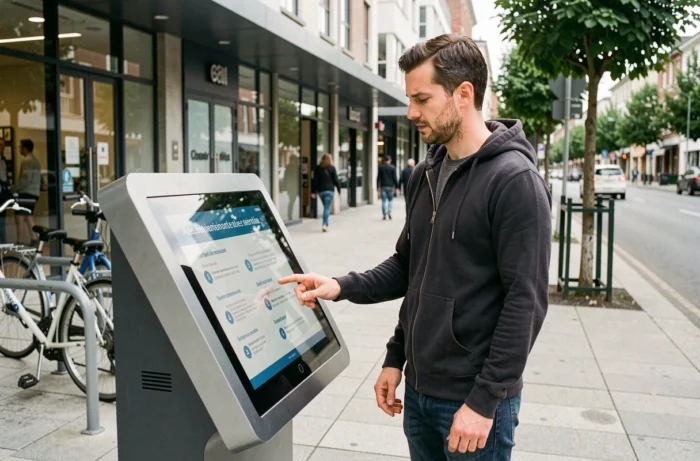
GPSO’s ecological transition plan: beyond the agreement signed with the French government
The ecological recovery and transition contract (CRTE) signed by GPSO and the French government covers a broad range of areas: energy-efficient renovation of public buildings, sustainable mobility, and urban biodiversity. On the ground, it takes shape through projects led by each municipality.
What sets GPSO’s approach apart is the combination of contractual commitments and open data publication. The CRTE sets the direction, while open data provides the dashboard. It is possible to check whether the commitments made in 2021 are translating into measurable results in composting, employment inclusion, address management, and other everyday services.
This dual approach—political commitment and data transparency—remains uncommon among public territorial establishments in Île-de-France. It requires a willingness to be held accountable that goes beyond institutional communications, as well as technical tools that not all intermunicipal authorities have yet put in place. GPSO is betting that public data will strengthen residents’ trust in local policies—a bet whose impact will be measured over several years.