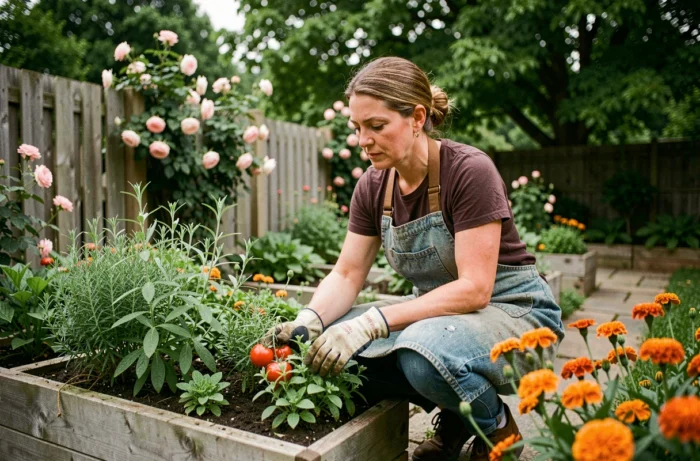
A thriving garden all year round is based on a principle often overlooked: the succession of visual focal points from season to season. Rather than a spectacular flower bed in June and a bare one in November, the goal is to spread blooms, evergreen foliage, and textures over twelve months. This planning work conditions everything else, from the choice of plants to the organization of spaces.
Drought resistance: the first filter for choosing plants
Local watering restrictions have become a key design parameter. Homeowners can check the applicable measures for their address through the VigiEau system, which reports the level of drought community by community. Designing a garden without considering these constraints risks seeing your plantings suffer from the first dry summer.
Industry professionals report a clear decline in fragile annuals in favor of drought-adapted plants: lavenders, sages, agapanthus. These plants require only occasional watering once established and maintain an interesting shape even in the height of summer. For those who wish to visit Jardins & Paysages online, detailed sheets help identify species compatible with each region.
This choice oriented towards water efficiency does not mean giving up color. Sages and agapanthus bloom from June to September, while lavenders bring their rounded volume and fragrance from spring onwards. The idea is to create a plant base that thrives without intensive watering, then to add a few more water-demanding plants in targeted areas, near a water point or in a shaded bed.
Structuring a garden with varied heights and textures
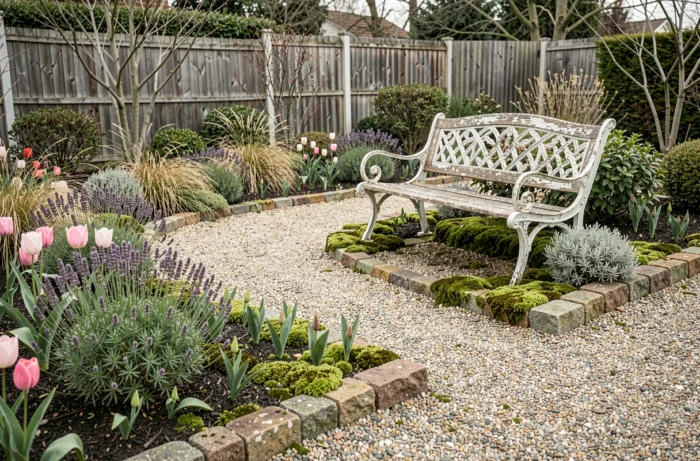
A garden that appears lively all year round plays on height contrasts. At the back, trees or large shrubs (preferably evergreens) form a stable backdrop. In front of them, medium-sized perennials ensure a relay of blooms. At the edges, ground covers or low grasses add movement.
This layered arrangement is not just aesthetic. It creates microclimates: the shade cast by trees protects delicate plants in summer, and hedges break the wind that dries out the beds. Each layer fulfills a climatic function in addition to its visual role.
Ornamental grasses and evergreen foliage
Grasses (miscanthus, stipa, pennisetum) remain decorative from summer until late winter thanks to their dried spikes. When combined with evergreens like boxwood, laurustinus, or photinia, they ensure that the garden never looks completely bare.
A common trap is to plant too many deciduous plants. In December, a garden made up of more than half bare deciduous trees gives an impression of neglect. Aiming for at least one third of evergreens in each bed maintains a visible structure even in the heart of winter.
Biodiversity spaces: areas of tall grass and spaced mowing
The French Office for Biodiversity recommends spacing out mowings and maintaining areas of tall grass in your garden. These zones, far from being neglected, welcome wildflowers and pollinating insects that subsequently benefit cultivated beds.
Specifically, reserving a corner of the yard (at the back of the garden or along a fence) where grass grows freely turns maintenance into an asset. Mowing occurs two to three times a year, reducing overall work time. The daisies, clovers, and yarrow that develop there add spontaneous blooms in spring and summer.

Combining wild areas and structured beds
The transition between a mowed lawn and a tall grass area may seem abrupt. A border of low perennials (perennial geraniums, nepeta) or a small dry stone wall creates a clear boundary. The garden maintains its neat appearance while integrating a biodiversity space.
- Define the area with a Japanese stepping stone path or a row of flat stones to signal a deliberate choice, not a mowing oversight.
- Mow at the end of summer and leave the hay in place for a few days to allow the seeds to fall to the ground before removing it.
- Install an insect hotel or a pile of dead wood nearby to complement the habitat provided by the tall grass.
Maintenance considered from the design phase: the often-overlooked criterion
Future maintenance should be among the top design criteria, alongside aesthetics or the initial budget. A beautiful garden on paper that requires ten hours of work per week will end up neglected within a few months.
Some design choices drastically reduce the workload:
- Mulch the beds with wood chips or cocoa shells, which limits weeding and retains soil moisture.
- Favor perennials that require only annual pruning (shrubby sages, heucheras, grasses) rather than annuals that need replanting each spring.
- Group plants with similar water needs in the same bed to simplify watering, instead of scattering demanding species everywhere.
- Choose durable materials for paths and borders (stone, treated wood) to avoid frequent replacements.
This maintenance-oriented design logic also changes the approach to vegetable gardening. A raised bed vegetable garden requires less weeding than a traditional garden and remains accessible without bending down. For a garden that thrives all year round, the consistency of moderate maintenance is better than heavy, spaced interventions.
A garden that remains attractive twelve months a year does not require an extravagant budget or landscaping expertise. It mainly requires accepting that the land dictates its rules: the soil, local climate, water restrictions, and available time for maintenance are the real starting parameters. Starting from these constraints rather than an idealized image is the difference between a garden that lasts and one that disappoints by the second summer.