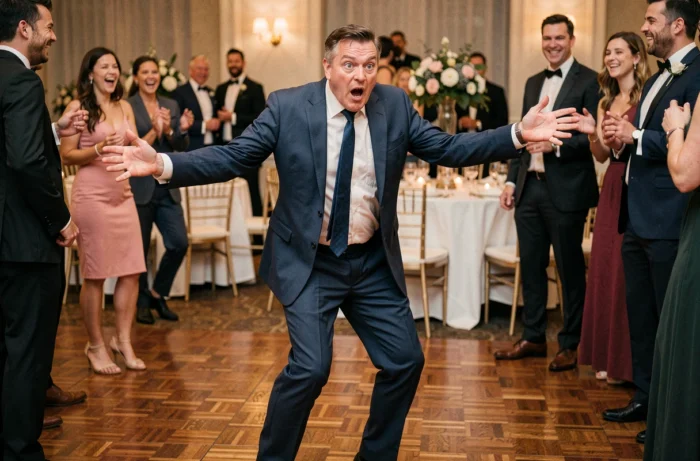
A wedding “paper ball” video is a compilation shown during the reception, made up of video messages recorded in advance by the couple’s friends and family. Each participant receives a crumpled sheet of paper (the famous “paper ball”) containing a secret question or instruction, then films themselves responding to it. The final edit alternates between these clips to create a sequence of funny, moving and often unpredictable moments.
Image rights and sharing a wedding video online
Before discussing the content itself, there is an important legal point for organizers to consider. Agreeing to be filmed for a paper ball video does not mean agreeing to have it shared online. Consent to filming and consent to publication are two separate matters.
A wedding paper ball video intended for friends and family may require specific permission before it is posted publicly. The Paris Judicial Court reiterated this distinction in a ruling dated January 10, 2025, cited by Kohen Avocats.
Filming children calls for extra care. Article 372-1 of the French Civil Code requires organizers to check that the holders of parental authority have given their consent before sharing any footage. In practice, if consent has not been obtained, it is best to make the child unrecognizable (by blurring or cropping them out).
This legal framework should not put anyone off making a paper ball video. Simply provide participants with a straightforward form explaining that the video may be shared on social media. Most friends and family will sign without hesitation, and this precaution protects both the couple and their guests.
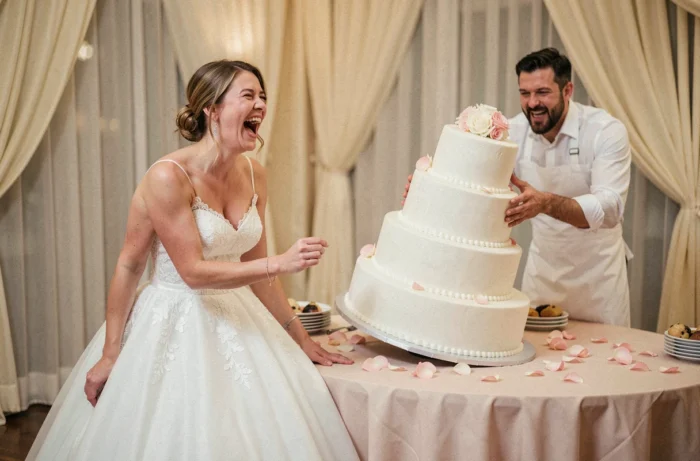
Hilarious paper ball videos: what makes the edit stand out
Wedding paper ball videos on YouTube rack up tens of thousands of views. The video of Hélène and Mathieu, posted by Niko Paladino, has more than 50,000 views. The one featuring Élise and Guillaume, edited by Alexandre Blonski, has a similar view count. What they have in common is a fast-paced edit that alternates short clips and keeps viewers engaged throughout.
The difference between a flat paper ball video and one that gets everyone laughing rarely comes down to budget. It comes down to three specific editing choices.
Choosing the instructions written on the paper balls
Instructions that are too vague (“say something nice to the couple”) produce clips that all feel the same. The best videos use prompts that spark spontaneous reactions.
- Asking participants to act out a specific anecdote they shared with the couple, without telling it out loud, forces them to improvise absurd gestures
- Asking them to sing a line from a specific song (often an unexpected choice for the person being filmed) creates an instant comic contrast
- Asking an embarrassing but good-natured question (“What’s the bride’s/groom’s worst flaw?”) leads to hesitation and knowing looks at the camera that give the edit its charm
The pace of the clips
No individual clip should run longer than fifteen to twenty seconds. The most-watched videos move briskly from one person to the next. The editor cuts each take before it naturally ends, creating the impression of a continuous flow and avoiding dead time.
The soundtrack has a direct impact on the pace. Hélène and Mathieu’s video uses “Don’t Worry” by Madcon (Matoma remix) and “Happy” by C2C Tetra, two upbeat tracks that carry the transitions between clips.
Adapting a paper ball video for social media
A paper ball video has two lives: it is shown at the reception, then shared online in the days that follow. These two uses come with different technical requirements.
For the reception, the standard horizontal format (16:9) is still the best choice. Most venues have a projector or screen set up in landscape orientation.
For social media, the vertical 9:16 format is the way to go. TikTok identifies this ratio as the native format for short videos and lets users add subtitles directly in its creation tool. Framing the shot with some extra space above and below the subject makes it possible to crop the footage later without cutting off anyone’s face.
The most effective approach is to produce two versions during editing: a full-length video of several minutes for the couple, and clips under thirty seconds optimized for social sharing. Each clip focuses on a single participant or reaction, which works better in a fast-scrolling feed.
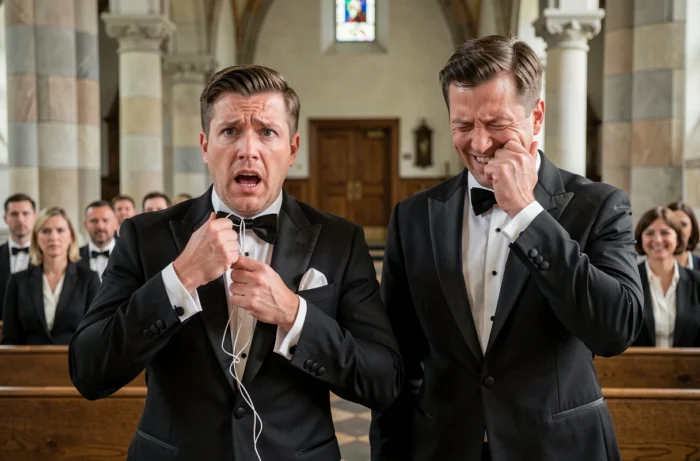
Making the screening a success on the wedding day
When you show the video has a direct impact on how well it goes down. Playing it during the meal, between courses, ensures that all the guests are seated and paying attention. Showing it during dessert or the cake cutting splits their attention.
Sound is the technical detail most often overlooked. A projector on its own is not enough: you need to connect powered speakers to the playback computer. Reception venues usually have a sound system available, but check that the connections are compatible in advance.
Another practical detail: check the room’s lighting. A daytime screening in a room with large windows can make the image impossible to see. Drawing the curtains or showing the video in the evening can make a huge difference.
- Check the audio connection at least two hours before the screening so you have time to fix any cable or file-format issues
- Copy the video file to a USB drive as well as the computer, so you have an immediate backup
- Choose someone other than the couple to start the video, preserving the element of surprise
A paper ball video remains one of the easiest wedding activities to organize and one of the most effective at bringing everyone together emotionally. The legal side calls for a few precautions, the edit needs to keep up the pace, and the screening requires a sound check. The rest comes down to the spontaneity of the people on camera, who always deliver their best moments when the camera is rolling and the prompt catches them off guard.