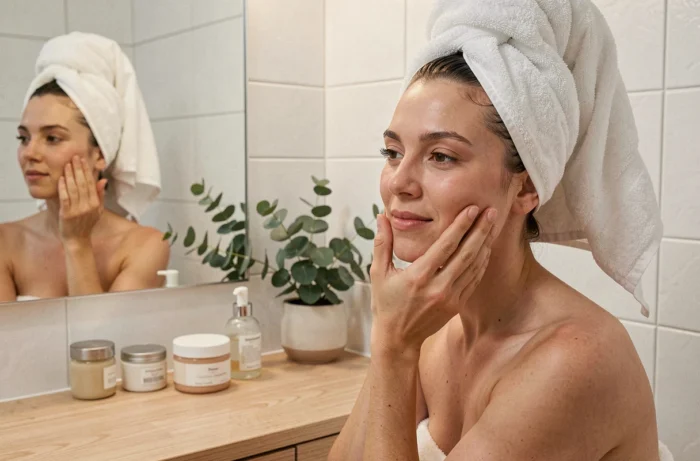
Daily self-care is built on practical habits that support the skin, body and mental balance. Rather than accumulating products or following a rigid program, beauty and well-being rely on a few targeted habits adapted to the realities of each day: the time available, sun exposure and hours spent sitting in front of a screen.
Sun protection and product choices: two beauty habits that are often poorly calibrated
UV protection isn’t just for beach holidays. Regular exposure—even during a daily commute—can accelerate skin aging. Applying sunscreen to your face and exposed areas before heading out is a skin-protection measure, not just a cosmetic habit.
Choosing the right product also deserves attention. Regulation (EU) 2023/2055 provides for the gradual ban of microplastics in cosmetics: rinse-off products are affected from October 2027, and leave-on products from October 2029. This timeline will change the composition of many creams, shower gels and exfoliants. Checking the INCI list on the packaging can already help you spot certain synthetic polymers and choose formulas with shorter ingredient lists.
For guidance on facial and body care suited to different skin types, visit https://www.sos-beaute.com.
An effective daily facial care routine takes three steps: gentle cleansing (one product is enough), moisturizing suited to your skin type, and sun protection in the morning. Using multiple serums and masks every night doesn’t deliver benefits proportional to the time invested.
Sedentary habits and a wellness routine: stay active without a workout plan
Physical well-being isn’t limited to playing sports. Santé.fr recommends that adults get at least 30 minutes of dynamic physical activity a day and advises them to stand up and walk for a few minutes every hour. This recommendation is aimed directly at people who spend most of their day sitting.
Everyday physical activity can take simple forms: climbing stairs, walking during a phone call or stretching between tasks. Santé.fr notes that moving more also supports mental health and can help improve sleep.
Stretching and micro-breaks at work
Sitting for several hours tightens the muscles in your back, neck and hips. Two or three five-minute stretching sessions throughout the day are enough to ease this tension. Pairing these breaks with a self-care habit (applying hand cream or massaging your temples) turns a pause from work into a moment of recovery.
- Stretch your neck by gently tilting your head to each side. Hold for ten seconds per side and repeat three times.
- Stand up every hour and walk for at least two minutes, even if it’s just along a hallway or around your desk.
- Roll a ball under the arch of your foot while seated to stimulate circulation in your foot.
Skin and facial care routine: adapt your habits to your budget and the time you actually have
An expensive or time-consuming facial care routine is hard to maintain. A common pitfall is buying too many products after watching multi-step tutorials, then giving up on them all after two weeks.
Washing your face morning and night remains the most worthwhile habit. A gentle cleanser without harsh fragrance suits most skin types. Follow with a single moisturizer suited to your skin: a lightweight one for oily skin and a richer one for dry skin. Two well-chosen products are better than eight used incorrectly.
Exfoliation and masks: finding the right frequency
Exfoliating your face once or twice a week is enough to remove dead skin cells without irritating the skin barrier. Physical scrubs with grains are suitable for normal skin, while gentle chemical exfoliants (low-concentration fruit acids) are preferable for sensitive skin.
Hydrating or purifying masks are an extra step, not a requirement. Applying one once a week for ten minutes can visibly improve your complexion without making your routine more complicated.

Sleep and nutrition: the unseen foundation of healthy skin
Your skin regenerates while you sleep. A prolonged lack of rest can leave your complexion dull, make dark circles more noticeable and slow healing. Regular sleep protects your skin as much as night cream does.
Nutrition plays a similar role. Fruits and vegetables rich in vitamins A and C support cell renewal. Staying hydrated from within (with water or herbal tea) complements the topical hydration you apply to your skin.
Reduce stress without adding another activity
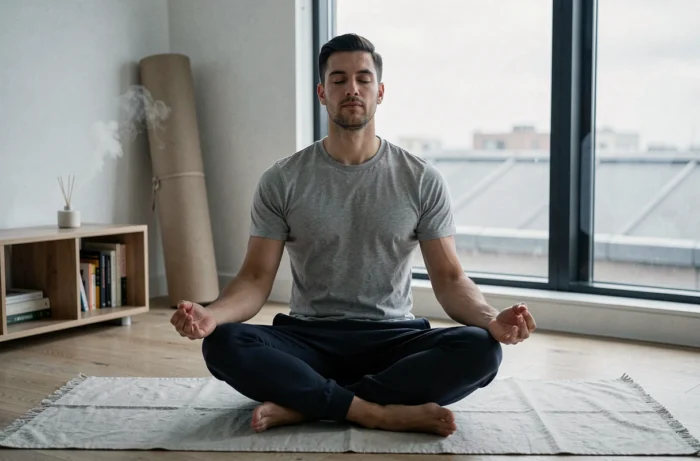
Chronic stress accelerates skin aging and disrupts sleep. Reducing stress doesn’t necessarily mean adding another activity (meditation, yoga or sophrology) to an already busy schedule.
- Breathing slowly for two minutes before bed lowers your heart rate and makes it easier to fall asleep.
- Limiting screen use for an hour before bed reduces exposure to blue light, which delays melatonin production.
- Spending five minutes massaging your face in the evening combines skincare with muscle relaxation.
The most sustainable beauty and wellness habits are those that fit into your existing routine without adding mental load. Consistency with simple habits delivers results that complex routines abandoned after a few days never will. What matters is sticking with cleansing, sun protection, a few minutes of movement and a healthy sleep schedule.